Who Spends the Most on War? 210 Years of Military Budgets, Ranked

Since Waterloo, the title of the world’s biggest military spender has changed hands 41 times. Behind each change is a war, a revolution or an arms race, and sometimes a quirk in the numbers.

In 1816, the year after Waterloo, the biggest military budget in the world belonged to Britain: about $2.2 billion in today’s money. Its nearest rivals, Russia and France, spent around $1.4 billion each. Two centuries later, in 2025, the United States spent roughly $906 billion, more than 400 times Britain’s 1816 figure and more than the next seven countries combined.

Between those two years, the title of the world’s biggest military spender changed hands 41 times. Six countries held it: Britain, France, Russia (as an empire, and later as the Soviet Union), Prussia and Germany, Japan, and the United States. The changes were rarely gradual. A war would start, one country’s budget would jump tenfold in two years, and then it would fall back just as fast. Our chart race replays all 210 years in 15 minutes. This piece tells the stories behind the bars.

All figures here are military expenditure in constant 2024 US dollars, so a year in the 1830s can be compared with a year in the 2020s. They come from the Correlates of War project’s National Material Capabilities dataset, extended to 2025 with figures from the Stockholm International Peace Research Institute (SIPRI). The older the number, the more it is an estimate; we come back to what that means at the end.

Who had the world's biggest military budget, 1816–2025
The country at #1 each year. The top spot changed hands 41 times.
United KingdomFranceRussia / Soviet UnionUnited StatesPrussia / GermanyJapan
1816–1821: United Kingdom at #11822–1825: Kingdom of France at #11826–1827: United Kingdom at #11828–1849: Kingdom of France → France at #11850: Russian Empire at #11851–1852: France → French Empire at #11853: Russian Empire at #11854: United Kingdom at #11855: French Empire at #11856: Russian Empire at #11857–1860: French Empire at #11861–1865: United States at #11866: French Empire at #11867: United States at #11868: United Kingdom at #11869–1871: French Empire → France at #11872–1879: Russian Empire at #11880–1884: France at #11885: United Kingdom at #11886–1887: France at #11888: German Empire at #11889: France at #11890: German Empire at #11891–1894: France at #11895–1897: Russian Empire at #11898: United States at #11899–1903: United Kingdom at #11904: Empire of Japan at #11905–1910: Russian Empire at #11911: United Kingdom at #11912: Russian Empire at #11913–1915: German Empire at #11916–1917: United Kingdom at #11918: German Empire at #11919–1920: United States at #11921–1937: Soviet Russia → Soviet Union at #11938–1942: Germany at #11943–1947: United States at #11948–1950: Soviet Union at #11951–1970: United States at #11971–1988: Soviet Union at #11989–2025: United States at #11989–2025182518501875190019251950197520002025
1816–1821: United Kingdom at #11822–1825: Kingdom of France at #11826–1827: United Kingdom at #11828–1849: Kingdom of France → France at #11850: Russian Empire at #11851–1852: France → French Empire at #11853: Russian Empire at #11854: United Kingdom at #11855: French Empire at #11856: Russian Empire at #11857–1860: French Empire at #11861–1865: United States at #11866: French Empire at #11867: United States at #11868: United Kingdom at #11869–1871: French Empire → France at #11872–1879: Russian Empire at #11880–1884: France at #11885: United Kingdom at #11886–1887: France at #11888: German Empire at #11889: France at #11890: German Empire at #11891–1894: France at #11895–1897: Russian Empire at #11898: United States at #11899–1903: United Kingdom at #11904: Empire of Japan at #11905–1910: Russian Empire at #11911: United Kingdom at #11912: Russian Empire at #11913–1915: German Empire at #11916–1917: United Kingdom at #11918: German Empire at #11919–1920: United States at #11921–1937: Soviet Russia → Soviet Union at #11938–1942: Germany at #11943–1947: United States at #11948–1950: Soviet Union at #11951–1970: United States at #11971–1988: Soviet Union at #11989–2025: United States at #11850190019502000
Source: COW National Material Capabilities v7 · SIPRI. Constant 2024 US dollars. Hover a mark for its value.
Show the numbers
YearsAt #1Years at #1
1816–1821United Kingdom6
1822–1825Kingdom of France4
1826–1827United Kingdom2
1828–1849Kingdom of France → France22
1850Russian Empire1
1851–1852France → French Empire2
1853Russian Empire1
1854United Kingdom1
1855French Empire1
1856Russian Empire1
1857–1860French Empire4
1861–1865United States5
1866French Empire1
1867United States1
1868United Kingdom1
1869–1871French Empire → France3
1872–1879Russian Empire8
1880–1884France5
1885United Kingdom1
1886–1887France2
1888German Empire1
1889France1
1890German Empire1
1891–1894France4
1895–1897Russian Empire3
1898United States1
1899–1903United Kingdom5
1904Empire of Japan1
1905–1910Russian Empire6
1911United Kingdom1
1912Russian Empire1
1913–1915German Empire3
1916–1917United Kingdom2
1918German Empire1
1919–1920United States2
1921–1937Soviet Russia → Soviet Union17
1938–1942Germany5
1943–1947United States5
1948–1950Soviet Union3
1951–1970United States20
1971–1988Soviet Union18
1989–2025United States37

1816–1860: France’s long lead

It is tempting to assume that Britain, with the largest navy and the largest empire, was also the biggest spender of the 19th century. For the first few years it was. But Britain demobilised quickly after 1815, and by 1822 France had moved ahead. Apart from a few short interruptions, France held the top spot from 1828 until the American Civil War: 36 of the 55 years between 1816 and 1870.

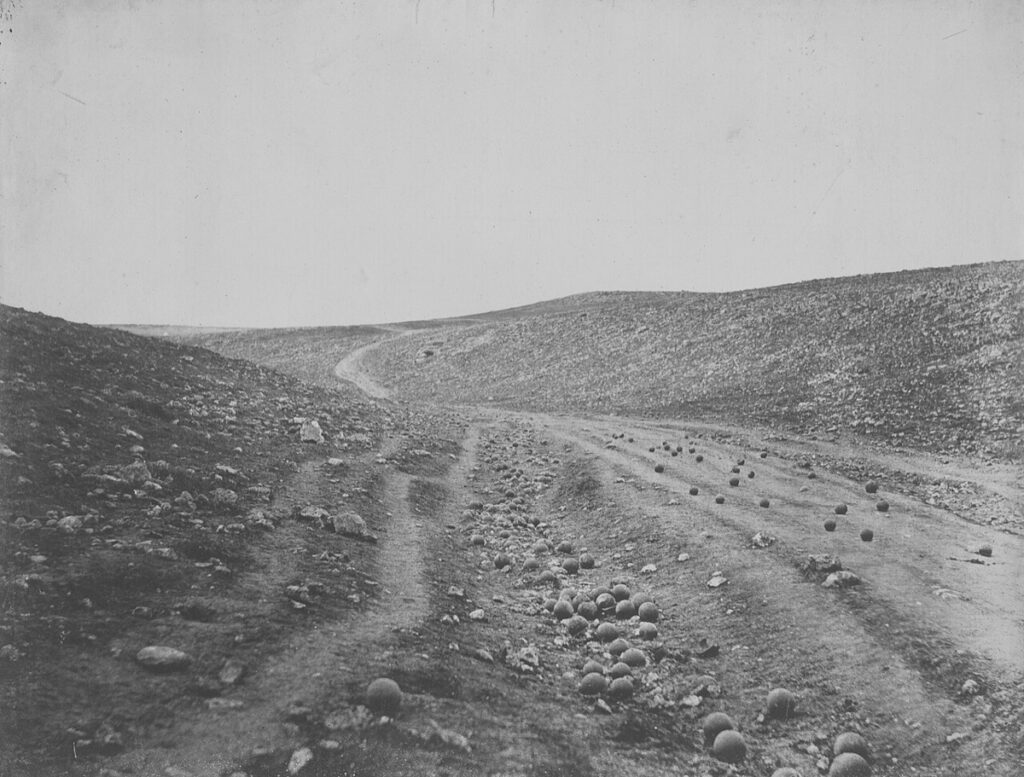
The reason was the army. France kept a large standing army raised by conscription, and from 1830 it was fighting a long, expensive war of conquest in Algeria. Britain, by contrast, spent most of its money on ships, which are expensive to build but need far fewer men. A war scare between the two countries over Egypt in 1840 is visible in the data: French spending rose from $1.8 billion in 1839 to $3.1 billion by 1842.

Crimean War
Roger Fenton's "The Valley of the Shadow of Death", 1855: cannonballs on a road near Sevastopol, in one of the first photographs of war. Image: Roger Fenton · Public domain · Wikimedia Commons

These were small numbers by later standards. In 1840 the ten biggest military budgets in the world added up to about $8 billion, less than Germany alone spends today. What changed them was war. When Britain, France and Russia fought each other in Crimea, Britain’s spending jumped to $11.3 billion in 1854, more than double anyone else’s, and in 1855 France, Russia and Britain were separated by barely a billion dollars.

1861: The war that broke the chart

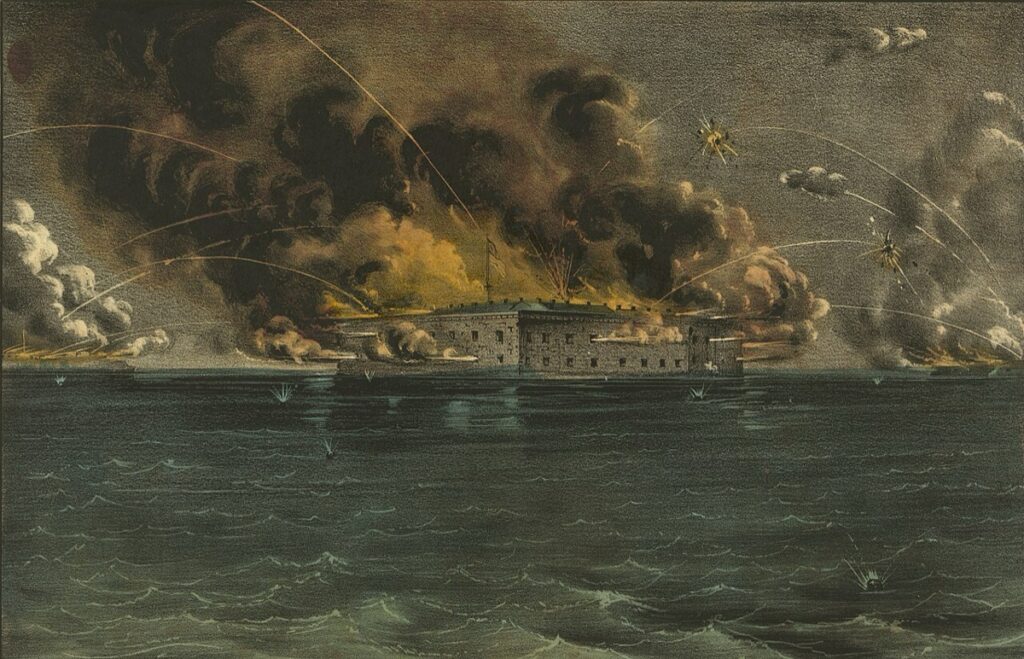
Nothing in the first half of the century prepared the chart for the American Civil War. In 1860 the United States spent a little over $1 billion on its military, less than a third of France, and it was nowhere near the top of the ranking. A year later the Union was spending $15.2 billion. By 1864 it was spending $26.7 billion, six times as much as France, the next country on the list.

American Civil War
The bombardment of Fort Sumter, Charleston Harbor, April 1861: the opening shots of the American Civil War. Image: Published by Currier and Ives · Public domain · Wikimedia Commons

The figure covers only the Union. The Confederacy’s spending is not in the dataset, so the true cost of the war to Americans was higher still. More than two million men served in the Union armies, and almost all of them were sent home within months of the surrender in 1865. The series shows the collapse: by 1866 France was back at #1.

1864: the Civil War breaks the chart
Military spending in 1864. Union spending alone was six times France's.
United States: $27 billion1. United States$27BFrench Empire: $4.5 billion2. French Empire$4.5BRussian Empire: $4.3 billion3. Russian Empire$4.3BUnited Kingdom: $3.7 billion4. United Kingdom$3.7BKingdom of Italy: $2.2 billion5. Kingdom of Italy$2.2BAustrian Empire: $1.8 billion6. Austrian Empire$1.8B
Source: COW National Material Capabilities v7 · SIPRI. Constant 2024 US dollars. Hover a mark for its value.
Show the numbers
RankCountrySpending in 1864
1United States$27 billion
2French Empire$4.5 billion
3Russian Empire$4.3 billion
4United Kingdom$3.7 billion
5Kingdom of Italy$2.2 billion
6Austrian Empire$1.8 billion

1870: The cheaper army wins

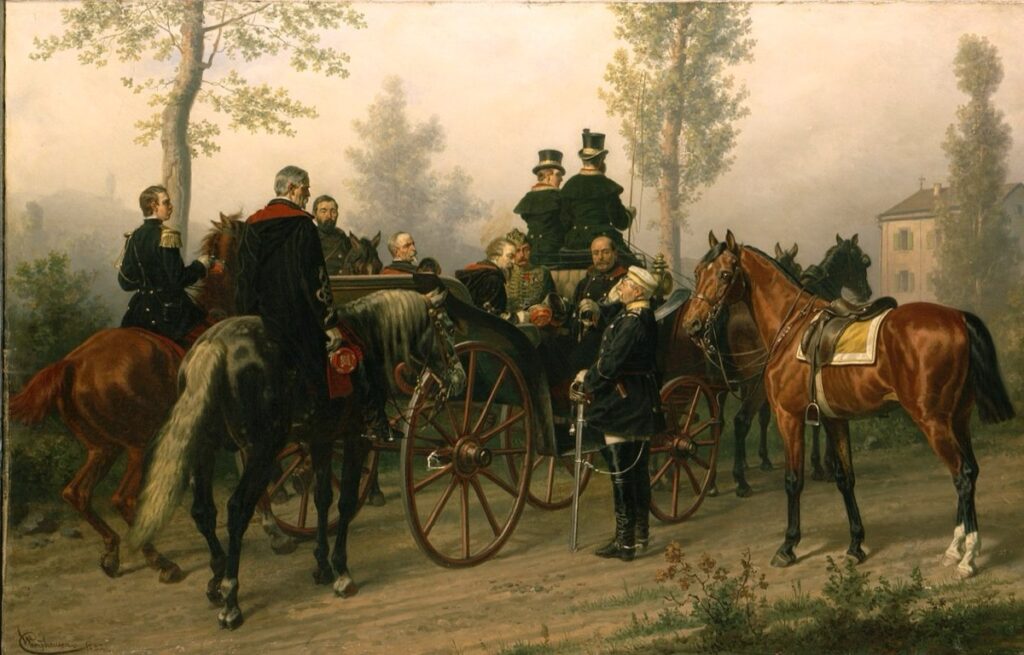
The wars that unified Germany are a reminder that the biggest budget does not always win. In 1866, when Prussia defeated Austria in seven weeks, it was not even among the four biggest spenders that year; Austria and Italy were. In 1870, the year of the Franco-Prussian War, France spent $9.4 billion and Prussia $6.8 billion. Prussia won anyway, and in January 1871 the German Empire was proclaimed in the Hall of Mirrors at Versailles.

Franco-Prussian War
Napoleon III and Bismarck after the Battle of Sedan, 1870, painted by Wilhelm Camphausen. France had the bigger budget; Prussia won the war. Image: Wilhelm Camphausen · Public domain · Wikimedia Commons

1871–1913: An armed peace

For the next four decades the great powers of Europe did not fight each other, but they never stopped preparing to. This is the closest stretch of the whole race. Russia led for 16 years, France for 13, Britain for 6 and Germany for 2, and in many years the top four were within a billion or two of each other. In 1890 Germany led with $6.4 billion, just ahead of France ($6.3 billion), Russia ($5.2 billion) and Britain ($5.1 billion).

The armed peace, 1871–1913
Four great powers, rarely more than a few billion dollars apart.
Russian EmpireUnited KingdomFranceGerman Empire
$0$10B$20B$30B18751880188518901895190019051910Boer WarRusso-Japanese WarGerman Empire$14B (1913)Russian Empire$13B (1913)United Kingdom$10B (1913)France$10B (1913)1871: Russian Empire $3.5B · United Kingdom $2.5B · France $8.6B · German Empire $4.3B1872: Russian Empire $3.8B · United Kingdom $3.0B · France $3.6B · German Empire $2.1B1873: Russian Empire $3.8B · United Kingdom $3.0B · France $3.6B · German Empire $2.1B1874: Russian Empire $4.0B · United Kingdom $3.2B · France $3.7B · German Empire $2.6B1875: Russian Empire $4.2B · United Kingdom $3.3B · France $3.9B · German Empire $2.8B1876: Russian Empire $5.3B · United Kingdom $3.4B · France $4.2B · German Empire $2.8B1877: Russian Empire $12B · United Kingdom $3.9B · France $4.5B · German Empire $3.2B1878: Russian Empire $9.5B · United Kingdom $4.1B · France $4.8B · German Empire $3.1B1879: Russian Empire $5.3B · United Kingdom $4.2B · France $4.9B · German Empire $3.3B1880: Russian Empire $4.9B · United Kingdom $3.4B · France $5.3B · German Empire $3.1B1881: Russian Empire $4.9B · United Kingdom $3.6B · France $6.0B · German Empire $3.4B1882: Russian Empire $4.4B · United Kingdom $3.9B · France $6.4B · German Empire $3.1B1883: Russian Empire $3.6B · United Kingdom $4.0B · France $6.2B · German Empire $3.3B1884: Russian Empire $3.7B · United Kingdom $4.5B · France $5.9B · German Empire $3.4B1885: Russian Empire $4.3B · United Kingdom $6.5B · France $6.1B · German Empire $3.4B1886: Russian Empire $4.3B · United Kingdom $5.1B · France $6.1B · German Empire $3.6B1887: Russian Empire $4.1B · United Kingdom $4.9B · France $6.2B · German Empire $5.3B1888: Russian Empire $3.7B · United Kingdom $4.7B · France $6.1B · German Empire $6.6B1889: Russian Empire $4.7B · United Kingdom $5.0B · France $6.3B · German Empire $4.4B1890: Russian Empire $5.2B · United Kingdom $5.1B · France $6.3B · German Empire $6.4B1891: Russian Empire $5.9B · United Kingdom $5.1B · France $6.3B · German Empire $4.8B1892: Russian Empire $5.1B · United Kingdom $5.4B · France $6.3B · German Empire $5.6B1893: Russian Empire $5.5B · United Kingdom $5.1B · France $6.2B · German Empire $6.2B1894: Russian Empire $6.1B · United Kingdom $5.8B · France $6.4B · German Empire $5.8B1895: Russian Empire $6.3B · United Kingdom $6.3B · France $6.3B · German Empire $5.4B1896: Russian Empire $6.5B · United Kingdom $6.3B · France $6.4B · German Empire $5.5B1897: Russian Empire $6.9B · United Kingdom $6.1B · France $6.5B · German Empire $6.8B1898: Russian Empire $6.7B · United Kingdom $6.7B · France $6.5B · German Empire $6.2B1899: Russian Empire $7.4B · United Kingdom $11B · France $6.7B · German Empire $6.4B1900: Russian Empire $7.1B · United Kingdom $20B · France $6.7B · German Empire $6.5B1901: Russian Empire $7.3B · United Kingdom $19B · France $6.9B · German Empire $6.9B1902: Russian Empire $7.6B · United Kingdom $15B · France $6.6B · German Empire $7.0B1903: Russian Empire $7.9B · United Kingdom $11B · France $6.4B · German Empire $6.9B1904: Russian Empire $8.2B · United Kingdom $9.7B · France $6.3B · German Empire $6.9B1905: Russian Empire $28B · United Kingdom $9.0B · France $6.8B · German Empire $7.5B1906: Russian Empire $15B · United Kingdom $8.8B · France $7.4B · German Empire $7.9B1907: Russian Empire $11B · United Kingdom $8.6B · France $7.1B · German Empire $8.4B1908: Russian Empire $9.5B · United Kingdom $8.3B · France $7.2B · German Empire $9.3B1909: Russian Empire $9.6B · United Kingdom $9.0B · France $7.5B · German Empire $9.3B1910: Russian Empire $9.8B · United Kingdom $9.7B · France $7.8B · German Empire $9.5B1911: Russian Empire $10B · United Kingdom $10B · France $8.7B · German Empire $9.7B1912: Russian Empire $11B · United Kingdom $10B · France $9.4B · German Empire $9.8B1913: Russian Empire $13B · United Kingdom $10B · France $10B · German Empire $14B
$0$10B$20B$30B1880189019001910Boer WarRusso-Japanese WarGerman Empire$14B (1913)Russian Empire$13B (1913)United Kingdom$10B (1913)France$10B (1913)1871: Russian Empire $3.5B · United Kingdom $2.5B · France $8.6B · German Empire $4.3B1872: Russian Empire $3.8B · United Kingdom $3.0B · France $3.6B · German Empire $2.1B1873: Russian Empire $3.8B · United Kingdom $3.0B · France $3.6B · German Empire $2.1B1874: Russian Empire $4.0B · United Kingdom $3.2B · France $3.7B · German Empire $2.6B1875: Russian Empire $4.2B · United Kingdom $3.3B · France $3.9B · German Empire $2.8B1876: Russian Empire $5.3B · United Kingdom $3.4B · France $4.2B · German Empire $2.8B1877: Russian Empire $12B · United Kingdom $3.9B · France $4.5B · German Empire $3.2B1878: Russian Empire $9.5B · United Kingdom $4.1B · France $4.8B · German Empire $3.1B1879: Russian Empire $5.3B · United Kingdom $4.2B · France $4.9B · German Empire $3.3B1880: Russian Empire $4.9B · United Kingdom $3.4B · France $5.3B · German Empire $3.1B1881: Russian Empire $4.9B · United Kingdom $3.6B · France $6.0B · German Empire $3.4B1882: Russian Empire $4.4B · United Kingdom $3.9B · France $6.4B · German Empire $3.1B1883: Russian Empire $3.6B · United Kingdom $4.0B · France $6.2B · German Empire $3.3B1884: Russian Empire $3.7B · United Kingdom $4.5B · France $5.9B · German Empire $3.4B1885: Russian Empire $4.3B · United Kingdom $6.5B · France $6.1B · German Empire $3.4B1886: Russian Empire $4.3B · United Kingdom $5.1B · France $6.1B · German Empire $3.6B1887: Russian Empire $4.1B · United Kingdom $4.9B · France $6.2B · German Empire $5.3B1888: Russian Empire $3.7B · United Kingdom $4.7B · France $6.1B · German Empire $6.6B1889: Russian Empire $4.7B · United Kingdom $5.0B · France $6.3B · German Empire $4.4B1890: Russian Empire $5.2B · United Kingdom $5.1B · France $6.3B · German Empire $6.4B1891: Russian Empire $5.9B · United Kingdom $5.1B · France $6.3B · German Empire $4.8B1892: Russian Empire $5.1B · United Kingdom $5.4B · France $6.3B · German Empire $5.6B1893: Russian Empire $5.5B · United Kingdom $5.1B · France $6.2B · German Empire $6.2B1894: Russian Empire $6.1B · United Kingdom $5.8B · France $6.4B · German Empire $5.8B1895: Russian Empire $6.3B · United Kingdom $6.3B · France $6.3B · German Empire $5.4B1896: Russian Empire $6.5B · United Kingdom $6.3B · France $6.4B · German Empire $5.5B1897: Russian Empire $6.9B · United Kingdom $6.1B · France $6.5B · German Empire $6.8B1898: Russian Empire $6.7B · United Kingdom $6.7B · France $6.5B · German Empire $6.2B1899: Russian Empire $7.4B · United Kingdom $11B · France $6.7B · German Empire $6.4B1900: Russian Empire $7.1B · United Kingdom $20B · France $6.7B · German Empire $6.5B1901: Russian Empire $7.3B · United Kingdom $19B · France $6.9B · German Empire $6.9B1902: Russian Empire $7.6B · United Kingdom $15B · France $6.6B · German Empire $7.0B1903: Russian Empire $7.9B · United Kingdom $11B · France $6.4B · German Empire $6.9B1904: Russian Empire $8.2B · United Kingdom $9.7B · France $6.3B · German Empire $6.9B1905: Russian Empire $28B · United Kingdom $9.0B · France $6.8B · German Empire $7.5B1906: Russian Empire $15B · United Kingdom $8.8B · France $7.4B · German Empire $7.9B1907: Russian Empire $11B · United Kingdom $8.6B · France $7.1B · German Empire $8.4B1908: Russian Empire $9.5B · United Kingdom $8.3B · France $7.2B · German Empire $9.3B1909: Russian Empire $9.6B · United Kingdom $9.0B · France $7.5B · German Empire $9.3B1910: Russian Empire $9.8B · United Kingdom $9.7B · France $7.8B · German Empire $9.5B1911: Russian Empire $10B · United Kingdom $10B · France $8.7B · German Empire $9.7B1912: Russian Empire $11B · United Kingdom $10B · France $9.4B · German Empire $9.8B1913: Russian Empire $13B · United Kingdom $10B · France $10B · German Empire $14B
Source: COW National Material Capabilities v7 · SIPRI. Constant 2024 US dollars. Hover a mark for its value.
Show the numbers
YearRussian EmpireUnited KingdomFranceGerman Empire
1871$3.5 billion$2.5 billion$8.6 billion$4.3 billion
1876$5.3 billion$3.4 billion$4.2 billion$2.8 billion
1881$4.9 billion$3.6 billion$6.0 billion$3.4 billion
1886$4.3 billion$5.1 billion$6.1 billion$3.6 billion
1891$5.9 billion$5.1 billion$6.3 billion$4.8 billion
1896$6.5 billion$6.3 billion$6.4 billion$5.5 billion
1901$7.3 billion$19 billion$6.9 billion$6.9 billion
1906$15 billion$8.8 billion$7.4 billion$7.9 billion
1911$10 billion$10 billion$8.7 billion$9.7 billion
1913$13 billion$10 billion$10 billion$14 billion

The spikes in this period came from wars fought far from Europe. Russia’s war with the Ottoman Empire took its spending to $12 billion in 1877. The United States briefly led in 1898, the year of its war with Spain. Britain’s war against the Boer republics in South Africa pushed its budget to $19.7 billion in 1900, almost three times anyone else’s. And in 1904, for the only time in the whole race, Japan held #1, as it went to war with Russia. Russia answered with $27.6 billion in 1905, the highest figure of the period.

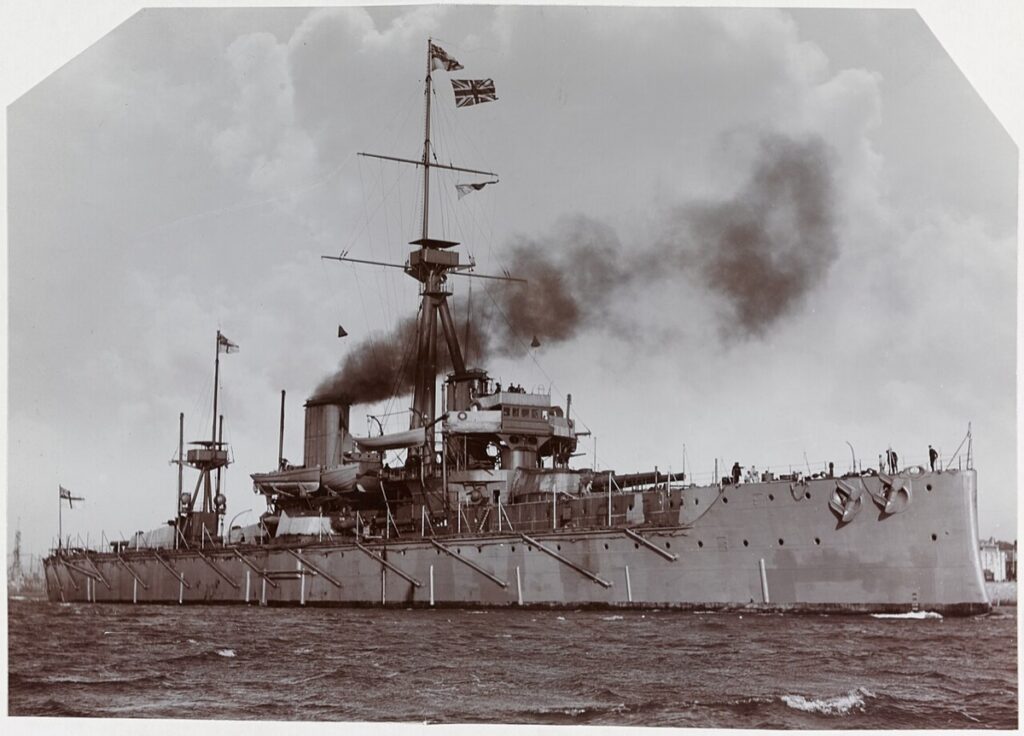
After 1906, when Britain launched HMS Dreadnought and made every older battleship obsolete, the race became a naval one as well. By 1913 four countries were spending more than $10 billion a year, and Germany, after a large army expansion that year, took the lead with $13.6 billion, just ahead of Russia’s $13.2 billion.

HMS Dreadnought
HMS Dreadnought, 1906. Her launch made every older battleship obsolete and turned the arms race into a naval one. Image: Unknown author · Public domain · Wikimedia Commons

1914–1918: The scale changes

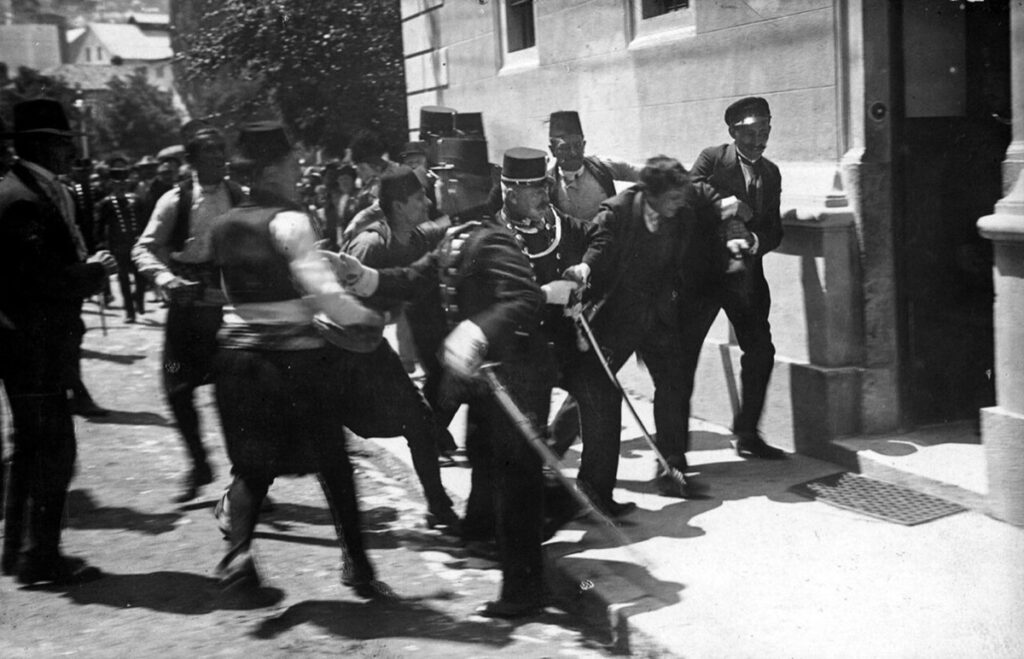
World War I did not just reorder the ranking; it changed what the numbers meant. Germany spent $55.9 billion in 1914 and $155.6 billion in 1915, more than ten times its peacetime budget. Britain, which had always preferred a small army and a big navy, raised mass armies for the first time and overtook Germany in 1916 with $179 billion. In 1918 Germany led again with $183 billion, with Britain, France and the United States all above $145 billion.

The Great War Begins
Sarajevo, 28 June 1914: police arrest a suspect after the assassination of Archduke Franz Ferdinand. Image: Unknown author, sometimes claimed to be Walter Tausch · Public domain · Wikimedia Commons

The United States entered the war in 1917, and its bills kept coming after the fighting ended: American budgets ran on a fiscal year that began in July, and spending peaked at $203 billion in 1919, the year the United States reached #1 for the first time in the 20th century. A year later it had fallen to $26 billion.

1919–1937: The leader nobody saw

The interwar years produce the race’s biggest surprise. With the Western democracies cutting their armies and signing naval limitation treaties, the country at the top from 1921 to 1937 was Soviet Russia, and then the Soviet Union. By these estimates, Soviet spending rose from about $15 billion in the mid-1920s to $66 billion in 1930, as Stalin’s Five-Year Plans built a war industry, and to $126 billion in 1935.

Those Soviet figures deserve caution. The Soviet Union did not publish honest defence budgets, and converting roubles into dollars at official exchange rates is a rough method; historians disagree about the true size of Soviet military effort in this period. What the data does show clearly is the trend: while Britain spent about $10 billion a year and the United States about $13 billion, the Soviet state was building one of the largest armed forces in the world.

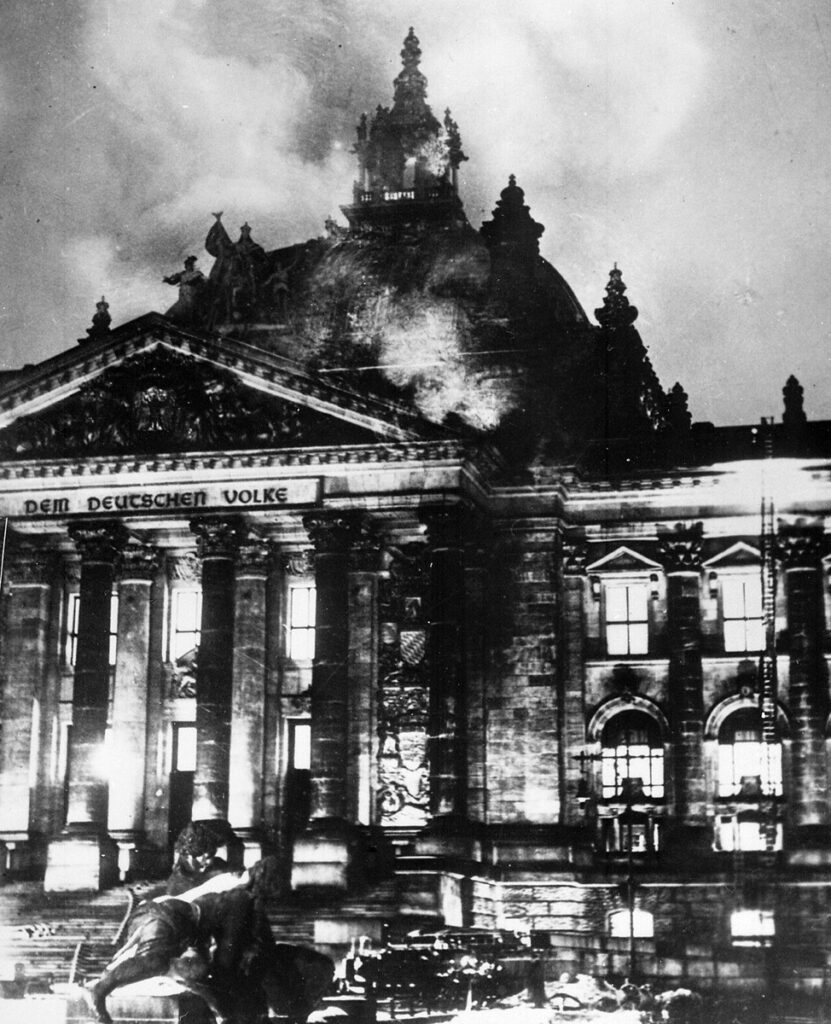
Germany’s rearmament began in earnest after Hitler took power in 1933. German spending went from $11 billion that year to $72 billion in 1937 and $165 billion in 1938, enough to take the top spot a year before the war.

Hitler Takes Power
The Reichstag in flames, February 1933, four weeks after Hitler became chancellor. Image: Unknown author · Public domain · Wikimedia Commons

1939–1945: Total war

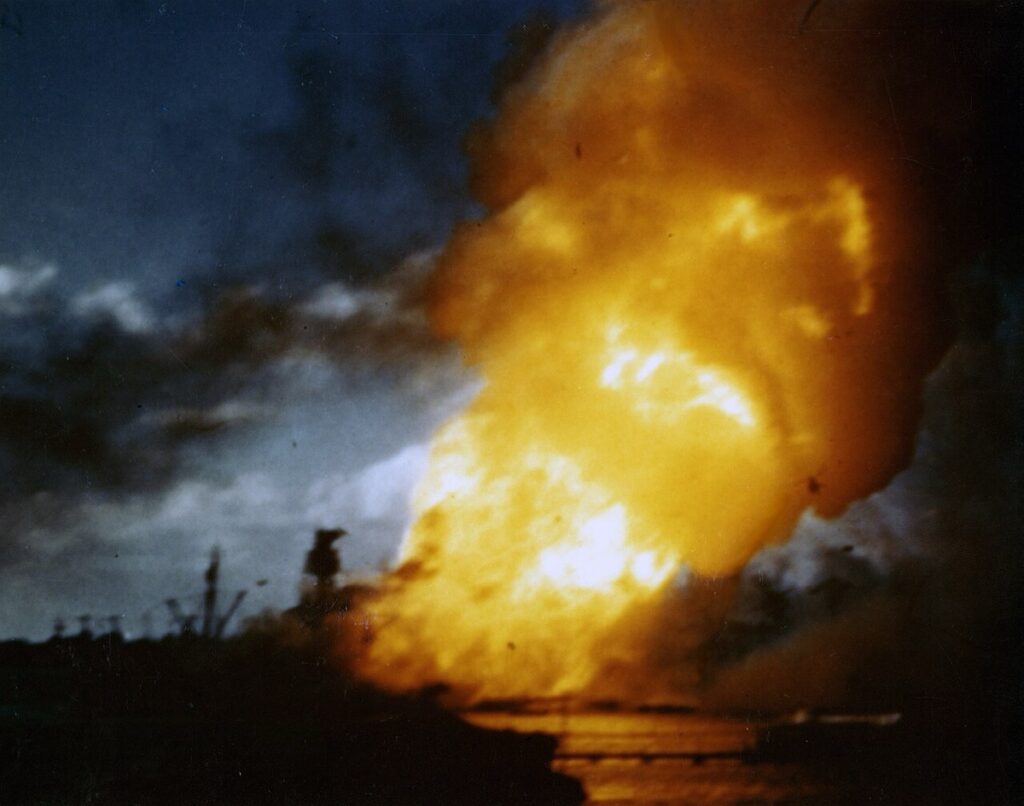
By 1940 Germany was spending $475 billion, and in 1942 $709 billion. But the decisive line on the chart is the American one. The United States spent $134 billion in 1941, the year of Pearl Harbor; $499 billion in 1942; and $1.31 trillion in 1943, when it overtook Germany. In 1945 it reached $1.57 trillion, the highest figure for any country in any year of our 210-year dataset.

Pearl Harbor
USS Arizona burning at Pearl Harbor, 7 December 1941. Two years later the United States was the biggest military spender in the world. Image: U.S. Navy (frame clipped from a color motion picture taken from on… · Public domain · Wikimedia Commons
Two world wars on one scale, 1910–1945
World War I, which seemed unimaginable at the time, is a small hill next to World War II.
United StatesGermanyUnited KingdomSoviet Union
$0$500B$1.00T$1.50T$2.00T1910191519201925193019351940194519141939United States$1.57T (1945)United Kingdom$296B (1945)Germany$186B (1945)Soviet Union$150B (1945)1910: United States $8.8B · German Empire $9.5B · United Kingdom $9.7B · Russian Empire $9.8B1911: United States $9.0B · German Empire $9.7B · United Kingdom $10B · Russian Empire $10B1912: United States $9.0B · German Empire $9.8B · United Kingdom $10B · Russian Empire $11B1913: United States $9.7B · German Empire $14B · United Kingdom $10B · Russian Empire $13B1914: United States $7.9B · German Empire $56B · United Kingdom $53B · Russian Empire $27B1915: United States $8.0B · German Empire $156B · United Kingdom $144B · Russian Empire $140B1916: United States $8.0B · German Empire $143B · United Kingdom $179B · Russian Empire $125B1917: United States $16B · German Empire $175B · United Kingdom $186B · Russian Empire $99B1918: United States $146B · German Empire $183B · United Kingdom $169B · Soviet Russia $5.4B1919: United States $203B · Germany $1.4B · United Kingdom $13B · Soviet Russia $26B1920: United States $26B · Germany $1.2B · United Kingdom $23B · Soviet Russia $19B1921: United States $20B · Germany $1.3B · United Kingdom $14B · Soviet Russia $24B1922: United States $16B · Germany $520M · United Kingdom $10B · Soviet Union $31B1923: United States $12B · Germany $16B · United Kingdom $11B · Soviet Union $16B1924: United States $10B · Germany $2.2B · United Kingdom $11B · Soviet Union $15B1925: United States $11B · Germany $2.6B · United Kingdom $10B · Soviet Union $26B1926: United States $9.9B · Germany $2.8B · United Kingdom $10.0B · Soviet Union $31B1927: United States $11B · Germany $3.1B · United Kingdom $10B · Soviet Union $37B1928: United States $12B · Germany $3.3B · United Kingdom $9.9B · Soviet Union $43B1929: United States $13B · Germany $3.0B · United Kingdom $9.8B · Soviet Union $51B1930: United States $13B · Germany $3.1B · United Kingdom $9.6B · Soviet Union $66B1931: United States $14B · Germany $3.0B · United Kingdom $10B · Soviet Union $72B1932: United States $15B · Germany $3.4B · United Kingdom $7.5B · Soviet Union $51B1933: United States $14B · Germany $11B · United Kingdom $8.1B · Soviet Union $57B1934: United States $19B · Germany $17B · United Kingdom $13B · Soviet Union $82B1935: United States $18B · Germany $37B · United Kingdom $15B · Soviet Union $126B1936: United States $21B · Germany $53B · United Kingdom $20B · Soviet Union $66B1937: United States $23B · Germany $72B · United Kingdom $27B · Soviet Union $75B1938: United States $25B · Germany $165B · United Kingdom $41B · Soviet Union $121B1939: United States $22B · Germany $271B · United Kingdom $178B · Soviet Union $135B1940: United States $37B · Germany $475B · United Kingdom $223B · Soviet Union $138B1941: United States $134B · Germany $616B · United Kingdom $240B · Soviet Union $147B1942: United States $499B · Germany $709B · United Kingdom $259B · Soviet Union $141B1943: United States $1.31T · Germany $812B · United Kingdom $279B · Soviet Union $145B1944: United States $1.55T · Germany $905B · United Kingdom $290B · Soviet Union $144B1945: United States $1.57T · Germany $186B · United Kingdom $296B · Soviet Union $150B
$0$500B$1.00T$1.50T$2.00T191019201930194019141939United States$1.57T (1945)United Kingdom$296B (1945)Germany$186B (1945)Soviet Union$150B (1945)1910: United States $8.8B · German Empire $9.5B · United Kingdom $9.7B · Russian Empire $9.8B1911: United States $9.0B · German Empire $9.7B · United Kingdom $10B · Russian Empire $10B1912: United States $9.0B · German Empire $9.8B · United Kingdom $10B · Russian Empire $11B1913: United States $9.7B · German Empire $14B · United Kingdom $10B · Russian Empire $13B1914: United States $7.9B · German Empire $56B · United Kingdom $53B · Russian Empire $27B1915: United States $8.0B · German Empire $156B · United Kingdom $144B · Russian Empire $140B1916: United States $8.0B · German Empire $143B · United Kingdom $179B · Russian Empire $125B1917: United States $16B · German Empire $175B · United Kingdom $186B · Russian Empire $99B1918: United States $146B · German Empire $183B · United Kingdom $169B · Soviet Russia $5.4B1919: United States $203B · Germany $1.4B · United Kingdom $13B · Soviet Russia $26B1920: United States $26B · Germany $1.2B · United Kingdom $23B · Soviet Russia $19B1921: United States $20B · Germany $1.3B · United Kingdom $14B · Soviet Russia $24B1922: United States $16B · Germany $520M · United Kingdom $10B · Soviet Union $31B1923: United States $12B · Germany $16B · United Kingdom $11B · Soviet Union $16B1924: United States $10B · Germany $2.2B · United Kingdom $11B · Soviet Union $15B1925: United States $11B · Germany $2.6B · United Kingdom $10B · Soviet Union $26B1926: United States $9.9B · Germany $2.8B · United Kingdom $10.0B · Soviet Union $31B1927: United States $11B · Germany $3.1B · United Kingdom $10B · Soviet Union $37B1928: United States $12B · Germany $3.3B · United Kingdom $9.9B · Soviet Union $43B1929: United States $13B · Germany $3.0B · United Kingdom $9.8B · Soviet Union $51B1930: United States $13B · Germany $3.1B · United Kingdom $9.6B · Soviet Union $66B1931: United States $14B · Germany $3.0B · United Kingdom $10B · Soviet Union $72B1932: United States $15B · Germany $3.4B · United Kingdom $7.5B · Soviet Union $51B1933: United States $14B · Germany $11B · United Kingdom $8.1B · Soviet Union $57B1934: United States $19B · Germany $17B · United Kingdom $13B · Soviet Union $82B1935: United States $18B · Germany $37B · United Kingdom $15B · Soviet Union $126B1936: United States $21B · Germany $53B · United Kingdom $20B · Soviet Union $66B1937: United States $23B · Germany $72B · United Kingdom $27B · Soviet Union $75B1938: United States $25B · Germany $165B · United Kingdom $41B · Soviet Union $121B1939: United States $22B · Germany $271B · United Kingdom $178B · Soviet Union $135B1940: United States $37B · Germany $475B · United Kingdom $223B · Soviet Union $138B1941: United States $134B · Germany $616B · United Kingdom $240B · Soviet Union $147B1942: United States $499B · Germany $709B · United Kingdom $259B · Soviet Union $141B1943: United States $1.31T · Germany $812B · United Kingdom $279B · Soviet Union $145B1944: United States $1.55T · Germany $905B · United Kingdom $290B · Soviet Union $144B1945: United States $1.57T · Germany $186B · United Kingdom $296B · Soviet Union $150B
Source: COW National Material Capabilities v7 · SIPRI. Constant 2024 US dollars. Hover a mark for its value.
Show the numbers
YearUnited StatesGermanyUnited KingdomSoviet Union
1910$8.8 billion$9.5 billion$9.7 billion$9.8 billion
1915$8.0 billion$156 billion$144 billion$140 billion
1920$26 billion$1.2 billion$23 billion$19 billion
1925$11 billion$2.6 billion$10 billion$26 billion
1930$13 billion$3.1 billion$9.6 billion$66 billion
1935$18 billion$37 billion$15 billion$126 billion
1940$37 billion$475 billion$223 billion$138 billion
1945$1.57 trillion$186 billion$296 billion$150 billion

On one scale, World War I shrinks to a small hill. Britain’s wartime peak of $296 billion in 1945 was higher than any country’s spending in 1914–1918, yet the United States spent more than five times as much that year. The Soviet figure, around $150 billion a year throughout the war, is almost certainly too low for a country that fought the largest land war in history; it is another case where the exchange-rate method understates Soviet effort.

The Atomic Age
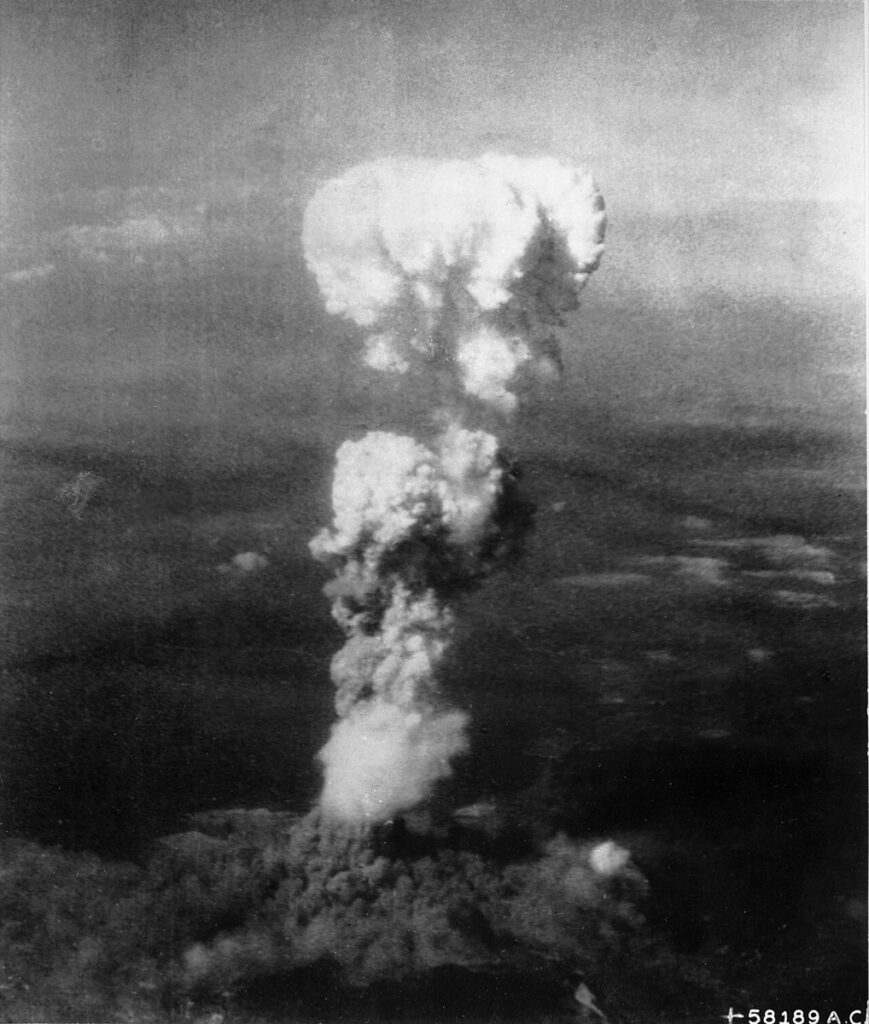
The atomic cloud over Hiroshima, August 1945, the year US military spending reached its all-time peak. Image: George R. Caron · Public domain · Wikimedia Commons

1946–1991: Two superpowers

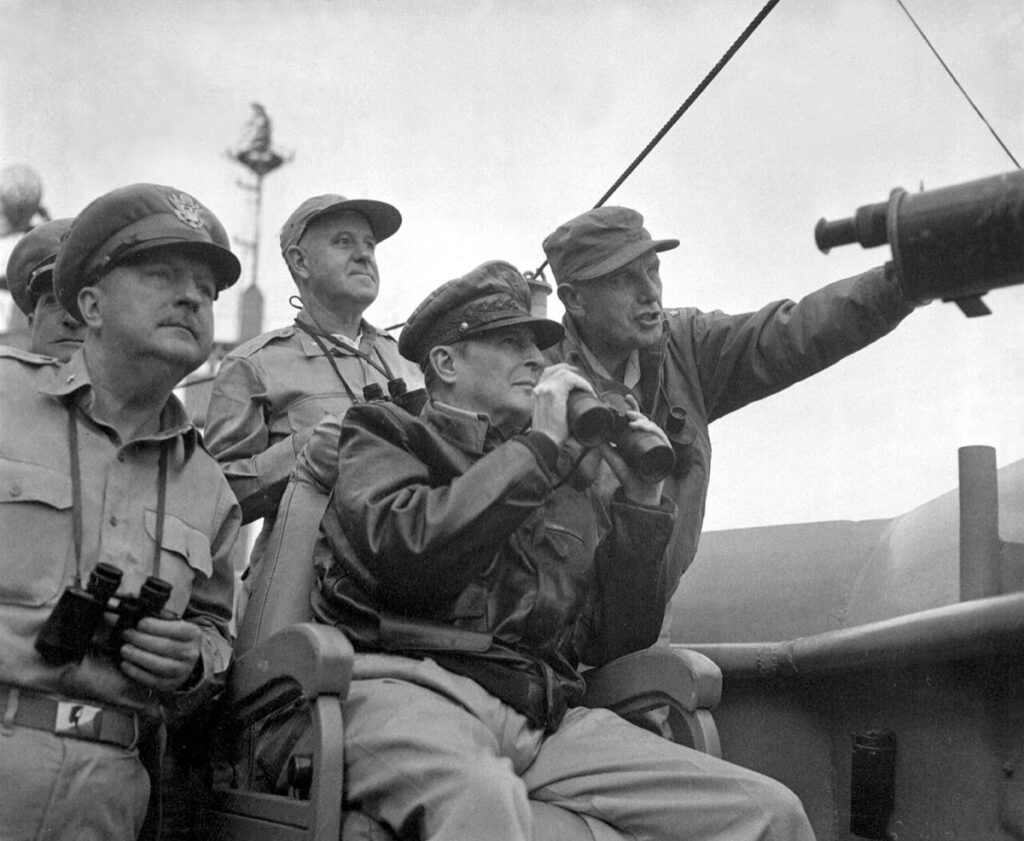
American demobilisation was even faster than after the Civil War. Spending fell from $725 billion in 1946 to $143 billion in 1948, and for three years, from 1948 to 1950, the Soviet Union was back at #1. Then came Korea. In 1950 the National Security Council’s NSC-68 report called for a massive build-up, and the outbreak of the Korean War that June made it happen: US spending roughly tripled in three years, to $582 billion in 1953. The United States led for the next two decades.

Korean War
General Douglas MacArthur watches the landing at Incheon, September 1950. The Korean War tripled US military spending in three years. Image: Nutter (Army) · Public domain · Wikimedia Commons
The superpower race, 1946–1991
The Soviet Union led from 1971 to 1988 by these estimates.
United StatesSoviet UnionChina
$0$200B$400B$600B$800B$1.00T195019551960196519701975198019851990KoreaUSSR takes #1Wall fallsUnited States$604B (1991)Soviet Union$308B (1991)China$43B (1991)1946: United States $725B · Soviet Union $141B · China $13B1947: United States $201B · Soviet Union $163B · China $3.6B1948: United States $143B · Soviet Union $172B · China $2.8B1949: United States $178B · Soviet Union $184B · China $27B1950: United States $190B · Soviet Union $202B · China $33B1951: United States $404B · Soviet Union $243B · China $37B1952: United States $565B · Soviet Union $259B · China $32B1953: United States $582B · Soviet Union $299B · China $30B1954: United States $500B · Soviet Union $328B · China $30B1955: United States $475B · Soviet Union $346B · China $30B1956: United States $482B · Soviet Union $309B · China $64B1957: United States $497B · Soviet Union $308B · China $69B1958: United States $495B · Soviet Union $329B · China $64B1959: United States $502B · Soviet Union $371B · China $71B1960: United States $481B · Soviet Union $392B · China $71B1961: United States $502B · Soviet Union $458B · China $83B1962: United States $543B · Soviet Union $518B · China $97B1963: United States $536B · Soviet Union $481B · China $110B1964: United States $518B · Soviet Union $475B · China $130B1965: United States $516B · Soviet Union $458B · China $137B1966: United States $653B · Soviet Union $464B · China $154B1967: United States $709B · Soviet Union $489B · China $154B1968: United States $728B · Soviet Union $565B · China $161B1969: United States $696B · Soviet Union $582B · China $174B1970: United States $629B · Soviet Union $624B · China $192B1971: United States $580B · Soviet Union $641B · China $167B1972: United States $582B · Soviet Union $667B · China $169B1973: United States $554B · Soviet Union $681B · China $173B1974: United States $547B · Soviet Union $693B · China $170B1975: United States $530B · Soviet Union $746B · China $166B1976: United States $502B · Soviet Union $761B · China $175B1977: United States $522B · Soviet Union $771B · China $169B1978: United States $525B · Soviet Union $784B · China $168B1979: United States $529B · Soviet Union $778B · China $130B1980: United States $548B · Soviet Union $765B · China $108B1981: United States $586B · Soviet Union $762B · China $105B1982: United States $638B · Soviet Union $770B · China $107B1983: United States $684B · Soviet Union $787B · China $109B1984: United States $716B · Soviet Union $797B · China $72B1985: United States $715B · Soviet Union $802B · China $19B1986: United States $760B · Soviet Union $823B · China $17B1987: United States $756B · Soviet Union $837B · China $16B1988: United States $748B · Soviet Union $843B · China $16B1989: United States $746B · Soviet Union $302B · China $17B1990: United States $696B · Soviet Union $309B · China $15B1991: United States $604B · Soviet Union $308B · China $43B
$0$200B$400B$600B$800B$1.00T19501960197019801990KoreaUSSR takes #1Wall fallsUnited States$604B (1991)Soviet Union$308B (1991)China$43B (1991)1946: United States $725B · Soviet Union $141B · China $13B1947: United States $201B · Soviet Union $163B · China $3.6B1948: United States $143B · Soviet Union $172B · China $2.8B1949: United States $178B · Soviet Union $184B · China $27B1950: United States $190B · Soviet Union $202B · China $33B1951: United States $404B · Soviet Union $243B · China $37B1952: United States $565B · Soviet Union $259B · China $32B1953: United States $582B · Soviet Union $299B · China $30B1954: United States $500B · Soviet Union $328B · China $30B1955: United States $475B · Soviet Union $346B · China $30B1956: United States $482B · Soviet Union $309B · China $64B1957: United States $497B · Soviet Union $308B · China $69B1958: United States $495B · Soviet Union $329B · China $64B1959: United States $502B · Soviet Union $371B · China $71B1960: United States $481B · Soviet Union $392B · China $71B1961: United States $502B · Soviet Union $458B · China $83B1962: United States $543B · Soviet Union $518B · China $97B1963: United States $536B · Soviet Union $481B · China $110B1964: United States $518B · Soviet Union $475B · China $130B1965: United States $516B · Soviet Union $458B · China $137B1966: United States $653B · Soviet Union $464B · China $154B1967: United States $709B · Soviet Union $489B · China $154B1968: United States $728B · Soviet Union $565B · China $161B1969: United States $696B · Soviet Union $582B · China $174B1970: United States $629B · Soviet Union $624B · China $192B1971: United States $580B · Soviet Union $641B · China $167B1972: United States $582B · Soviet Union $667B · China $169B1973: United States $554B · Soviet Union $681B · China $173B1974: United States $547B · Soviet Union $693B · China $170B1975: United States $530B · Soviet Union $746B · China $166B1976: United States $502B · Soviet Union $761B · China $175B1977: United States $522B · Soviet Union $771B · China $169B1978: United States $525B · Soviet Union $784B · China $168B1979: United States $529B · Soviet Union $778B · China $130B1980: United States $548B · Soviet Union $765B · China $108B1981: United States $586B · Soviet Union $762B · China $105B1982: United States $638B · Soviet Union $770B · China $107B1983: United States $684B · Soviet Union $787B · China $109B1984: United States $716B · Soviet Union $797B · China $72B1985: United States $715B · Soviet Union $802B · China $19B1986: United States $760B · Soviet Union $823B · China $17B1987: United States $756B · Soviet Union $837B · China $16B1988: United States $748B · Soviet Union $843B · China $16B1989: United States $746B · Soviet Union $302B · China $17B1990: United States $696B · Soviet Union $309B · China $15B1991: United States $604B · Soviet Union $308B · China $43B
Source: COW National Material Capabilities v7 · SIPRI. Constant 2024 US dollars. Hover a mark for its value.
Show the numbers
YearUnited StatesSoviet UnionChina
1946$725 billion$141 billion$13 billion
1951$404 billion$243 billion$37 billion
1956$482 billion$309 billion$64 billion
1961$502 billion$458 billion$83 billion
1966$653 billion$464 billion$154 billion
1971$580 billion$641 billion$167 billion
1976$502 billion$761 billion$175 billion
1981$586 billion$762 billion$105 billion
1986$760 billion$823 billion$17 billion
1991$604 billion$308 billion$43 billion

The Vietnam War pushed the American figure to $728 billion in 1968. As the war wound down, spending fell, while the Soviet budget kept rising steadily. In 1970 the two were almost level ($629 billion against $624 billion), and from 1971 to 1988 the Soviet Union led every year by these estimates, peaking at $843 billion in 1988. Ronald Reagan’s build-up in the 1980s narrowed the gap, with the United States reaching $760 billion in 1986, but did not close it.

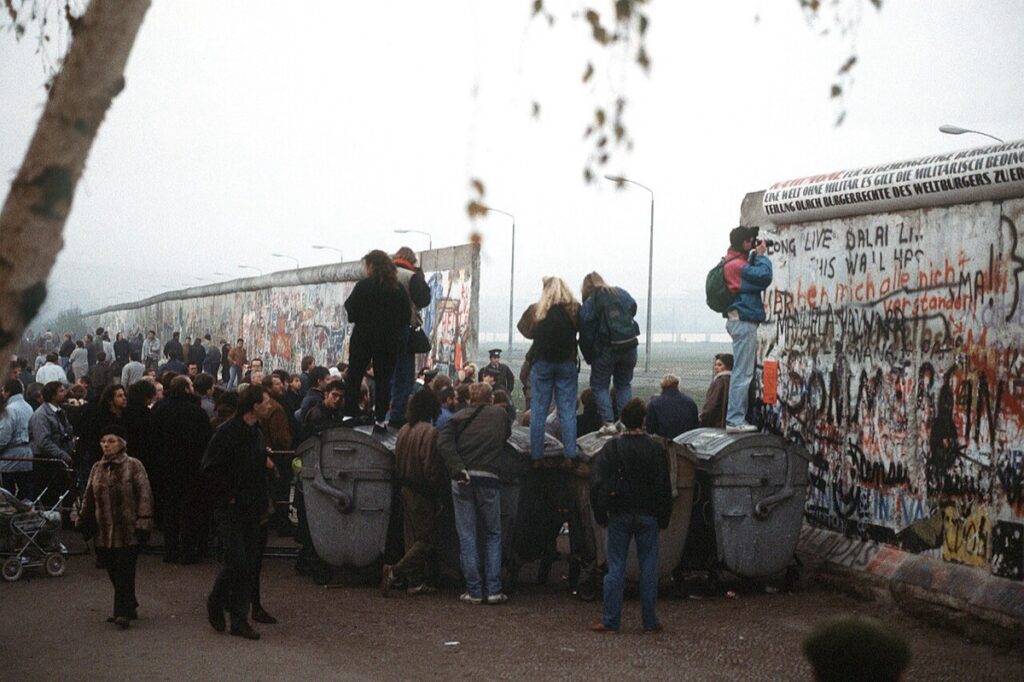
Then the Soviet line falls off a cliff: $843 billion in 1988, $302 billion in 1989. That is too abrupt to be literal. Spending was falling under Gorbachev, but the size of the drop most likely reflects a change in the underlying estimates, as the Soviet government began publishing its own defence figures. Either way, 1989 is the year the United States took the top spot back, and it has not given it up since.

The Wall Falls
West Germans gather at a new opening in the Berlin Wall, November 1989. That year the United States took the top spot back for good. Image: Series: Combined Military Service Digital Photographic Files, 1982 -… · Public domain · Wikimedia Commons

1992–2025: One superpower and a challenger

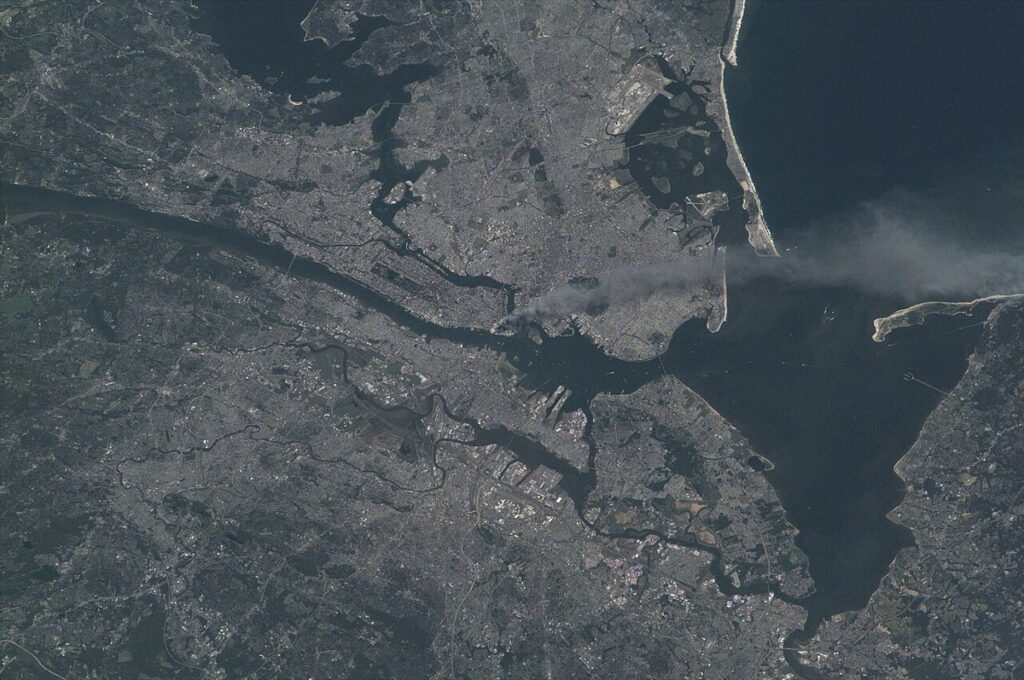
For the last 34 years the race for #1 has not been a race. American spending fell to a low of $538 billion in 1998, then rose with the wars that followed September 11 to almost $1 trillion in 2010. Budget caps brought it back below $800 billion in the mid-2010s, and it has climbed again since.

September 11
Smoke over Manhattan on 11 September 2001, seen from the International Space Station. Image: NASA/Expedition 3 · Public domain · Wikimedia Commons

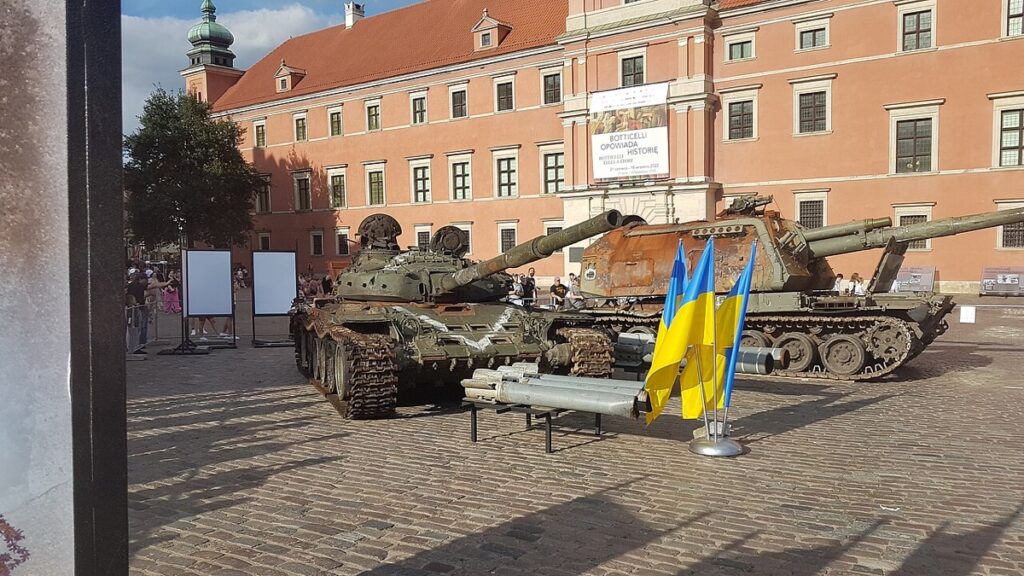
The real contest has been for second place. Russia held it through most of the 1990s, with a spike during the first Chechen War. In 2000 Russia, Japan and China were all between $75 billion and $95 billion. Since then China has pulled steadily away: $110 billion in 2010, $193 billion in 2015, $229 billion in 2020 and $286 billion in 2025. Russia’s invasion of Ukraine pushed its own spending back up to $143 billion, and Ukraine itself entered the world’s top ten.

The ranking in 2025
The United States spends more than the next seven countries combined.
United States: $906 billion1. United States$906BChina: $286 billion2. China$286BRussia: $143 billion3. Russia$143BGermany: $97 billion4. Germany$97BUnited Kingdom: $93 billion5. United Kingdom$93BIndia: $87 billion6. India$87BUkraine: $78 billion7. Ukraine$78BSaudi Arabia: $77 billion8. Saudi Arabia$77BJapan: $75 billion9. Japan$75BFrance: $62 billion10. France$62B
Source: COW National Material Capabilities v7 · SIPRI. Constant 2024 US dollars. Hover a mark for its value.
Show the numbers
RankCountrySpending in 2025
1United States$906 billion
2China$286 billion
3Russia$143 billion
4Germany$97 billion
5United Kingdom$93 billion
6India$87 billion
7Ukraine$78 billion
8Saudi Arabia$77 billion
9Japan$75 billion
10France$62 billion
Russia Invades Ukraine
A destroyed Russian T-72B tank from the 2022 invasion of Ukraine, put on display in Warsaw. Image: Kracho · CC BY-SA 4.0 · Wikimedia Commons

Europe is moving again too. In 2025 NATO members agreed to raise defence spending towards 5 percent of their economies over the next decade. Germany is already back at #4. If the pledges hold, the next decade of this chart may look more like the 1900s than the 1990s.

Two centuries added up

Add every year from 1816 to 2025 and the United States has spent about $57.8 trillion on its military, almost twice as much as Russia and the Soviet Union combined ($29.7 trillion). Germany ($9.8 trillion), Britain ($9.0 trillion) and China ($8.9 trillion) follow, with France, Japan, Saudi Arabia, Italy and India completing the top ten.

Questions readers ask

Which country spends the most on its military?

The United States. In 2025 it spent about $906 billion (in 2024 dollars), more than the next seven countries combined, and it has been the world’s biggest military spender every year since 1989.

Which country has spent the most on its military in history?

The United States. Adding every year from 1816 to 2025, it spent about $57.8 trillion, almost twice as much as Russia and the Soviet Union combined ($29.7 trillion). Its peak, $1.57 trillion in 1945, is the highest single year for any country.

Did the Soviet Union ever spend more on its military than the United States?

By these estimates, yes: from 1948 to 1950 and from 1971 to 1988, peaking at about $843 billion in 1988. Soviet figures are estimates converted at official exchange rates, so the exact years are uncertain.

Which countries had the biggest military budgets in 2025?

The United States ($906 billion), China ($286 billion), Russia ($143 billion), Germany ($97 billion) and the United Kingdom ($93 billion), all in 2024 dollars.

About the numbers

The main source is the Correlates of War National Material Capabilities dataset, version 7. For 2023–2025 we use the SIPRI Military Expenditure Database, joined to the older series at 2022. Amounts recorded in pounds before 1914 are adjusted with UK prices; later years with US consumer prices; everything is shown in 2024 dollars.

  • Figures before 1949 are estimates, and many countries’ series begin late: Ottoman figures start in 1851 and Qing China’s in 1896.
  • The US Civil War counts the Union only.
  • Soviet figures are converted at official exchange rates, which most historians think understates Soviet military effort. The series also shows abrupt breaks, such as 1988–1989, that reflect changes in the estimates rather than overnight changes in policy.
  • In 2005 the source’s figures for China and Russia drop by more than half in a single year and recover only slowly. Neither country cut its budget like that; it is a break in the estimates, and we show it as recorded.
  • Russia, the Russian Empire, Soviet Russia and the Soviet Union are one line, renamed as history goes; so are Prussia and Germany.
The series in five chapters

Each short covers one era in more depth: